

New Jersey Paid Sick Leave Enforcement-What Employers Need to Know in 2026
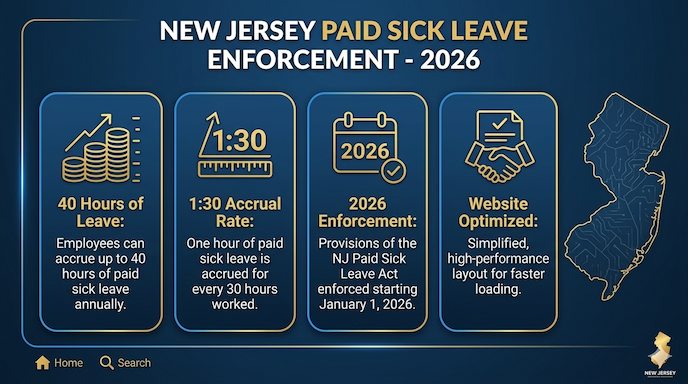
New Jersey’s Earned Sick Leave Law has been in effect since 2018, but 2025–2026 has brought a noticeable shift: the state is aggressively enforcing compliance, issuing more audits, penalties, and corrective orders than in prior years. For employers in New Jersey, sick leave compliance is no longer a passive requirement; it is a top HR priority.
The law requires employers to provide up to 40 hours of earned sick leave per benefit year, accrued at one hour for every 30 hours worked or front-loaded in a lump sum. While most employers understand the basic entitlement, recent enforcement actions show that the state is focusing on record-keeping, notice distribution, and retaliation claims, areas where many organizations fall short.
One of the most significant developments is the state’s increased scrutiny of recordkeeping practices. Employers must maintain detailed records of hours worked, sick time accrued, sick time used, and carryover amounts for at least five years. Investigators have been requesting these records during audits, and employers who cannot produce them face automatic presumptions of violations. This shift places new pressure on small and mid-sized employers that may not have robust HR systems.
Another area of heightened enforcement is retaliation. The law prohibits any adverse action, such as discipline, reduced hours, or negative scheduling changes, within 90 days of an employee using sick leave or filing a complaint. The state has made clear that it will treat even subtle changes as potential retaliation unless the employer can prove otherwise. This creates a need for careful documentation of performance issues and consistent application of policies.
The state is also targeting employers who impose unlawful barriers to using sick leave. Common violations include requiring employees to find their own replacements, demanding doctor’s notes for fewer than three consecutive absences, or restricting sick leave use during blackout periods. These practices, while common in some industries, are explicitly prohibited under New Jersey law.
Looking Ahead
Looking ahead, employers should expect continued enforcement momentum. The Department of Labor has signaled that it will expand its audit program, particularly in industries with high turnover or historically low compliance, such as hospitality, retail, and home healthcare. Additionally, proposed legislation could increase penalties and expand employee rights, making proactive compliance even more important.
To stay ahead, employers should review their sick leave policies, ensure they align with state requirements, and train supervisors on proper call-out procedures and anti-retaliation rules. Payroll and HR systems should be updated to track accruals and usage accurately, and employers should confirm that the required state notice has been distributed to all employees.
New Jersey’s renewed focus on sick leave enforcement reflects a broader trend toward strengthening worker protections. For employers, the message is clear: compliance is not optional, and the cost of inaction is rising. Taking steps now to tighten policies and documentation will reduce risk and support a healthier, more compliant workplace.
This article is not intended to be exhaustive nor should any discussion or opinions be construed as legal advice. Readers should contact legal counsel for legal advice